Gas Diffusion Electrode Assessment
Build an in-situ observation path around pores, internal wetting and transport in gas diffusion electrodes.
View product material↓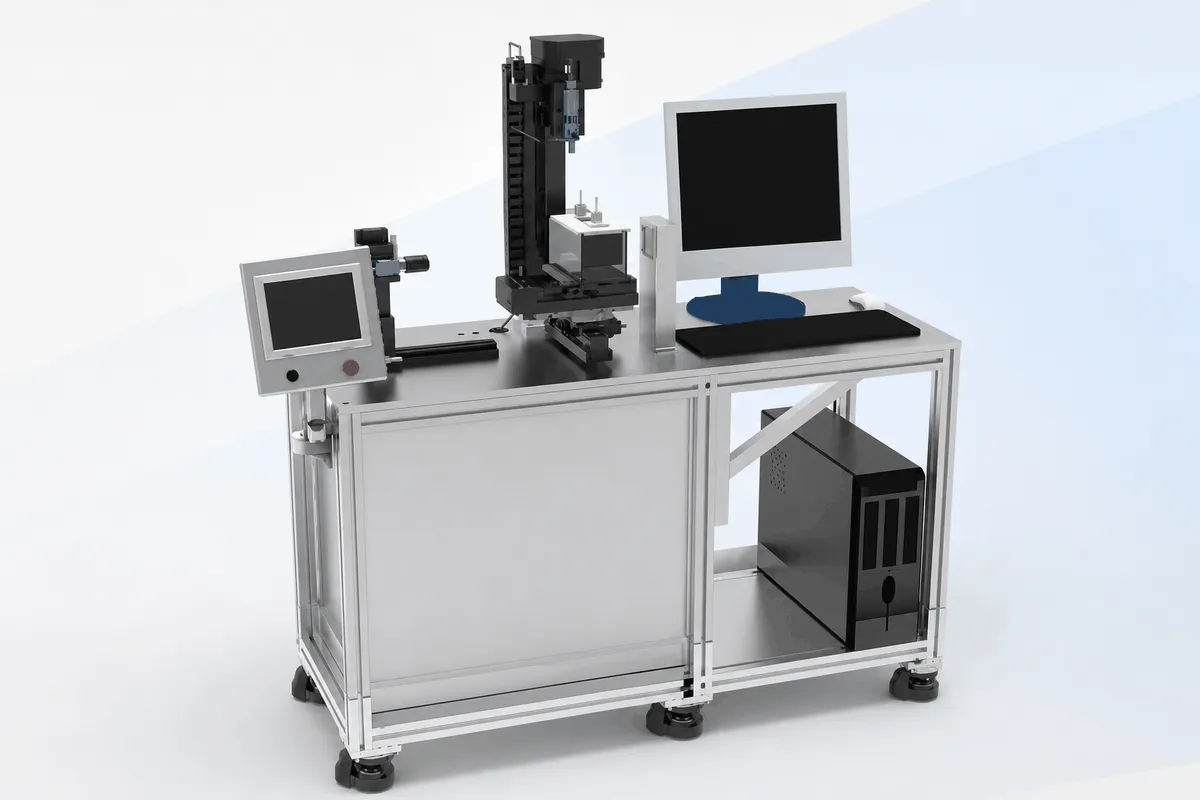
BPCC-A product overview
- Product introduction
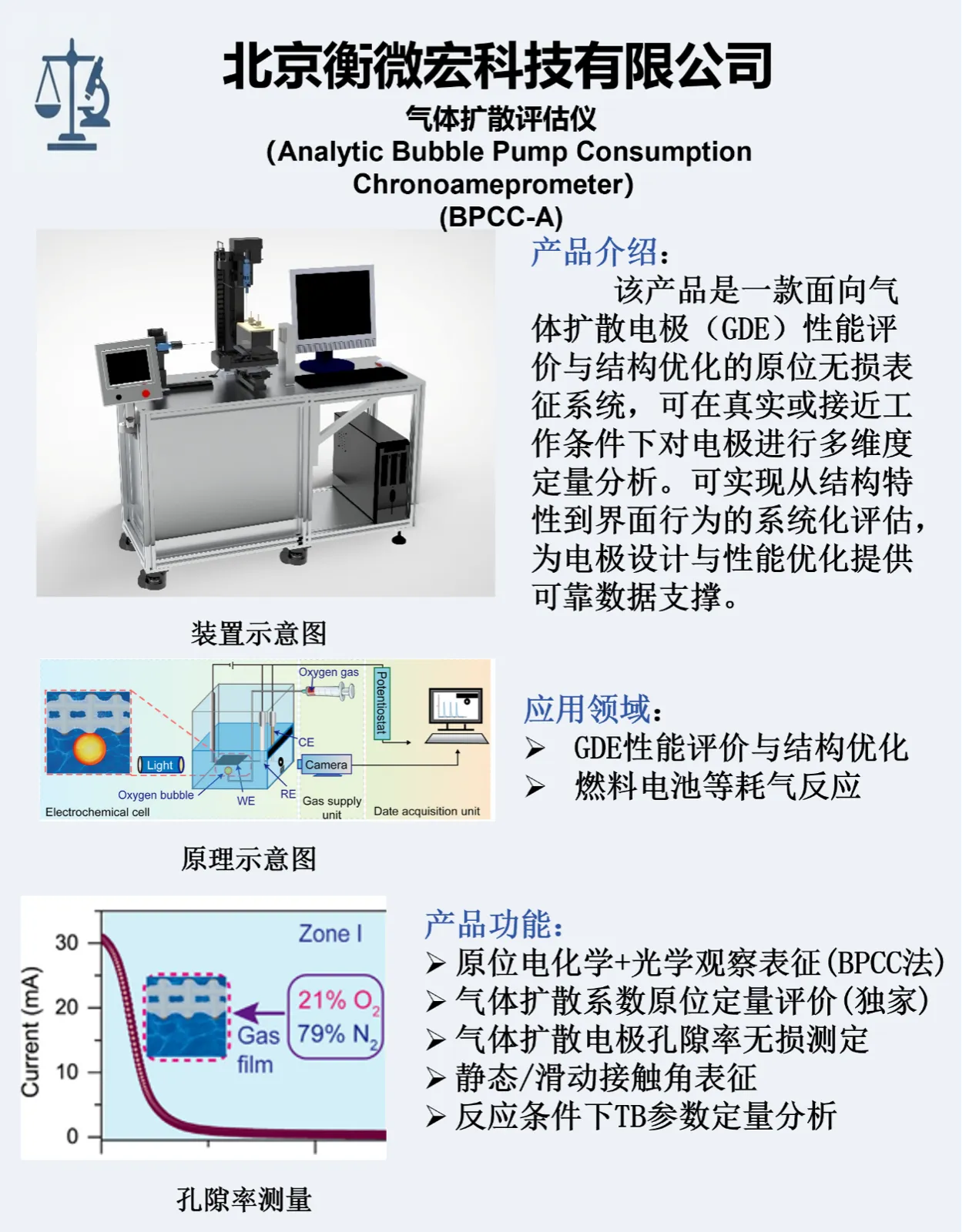
A comprehensive testing platform for gas-diffusion-electrode (GDE) performance evaluation and structure optimization, supporting in-situ characterization and multidimensional quantitative analysis.
- Product functions
- In-situ electrochemical and optical observation using the BPCC method
- In-situ quantitative evaluation of gas-diffusion coefficient
- GDE porosity evaluation
- Static / sliding contact-angle characterization
- Quantitative analysis of TB parameters under reaction conditions
- Application areas
- GDE performance evaluation and structure optimization
- Gas-consuming reactions such as fuel cells
BPCC-A technical principle
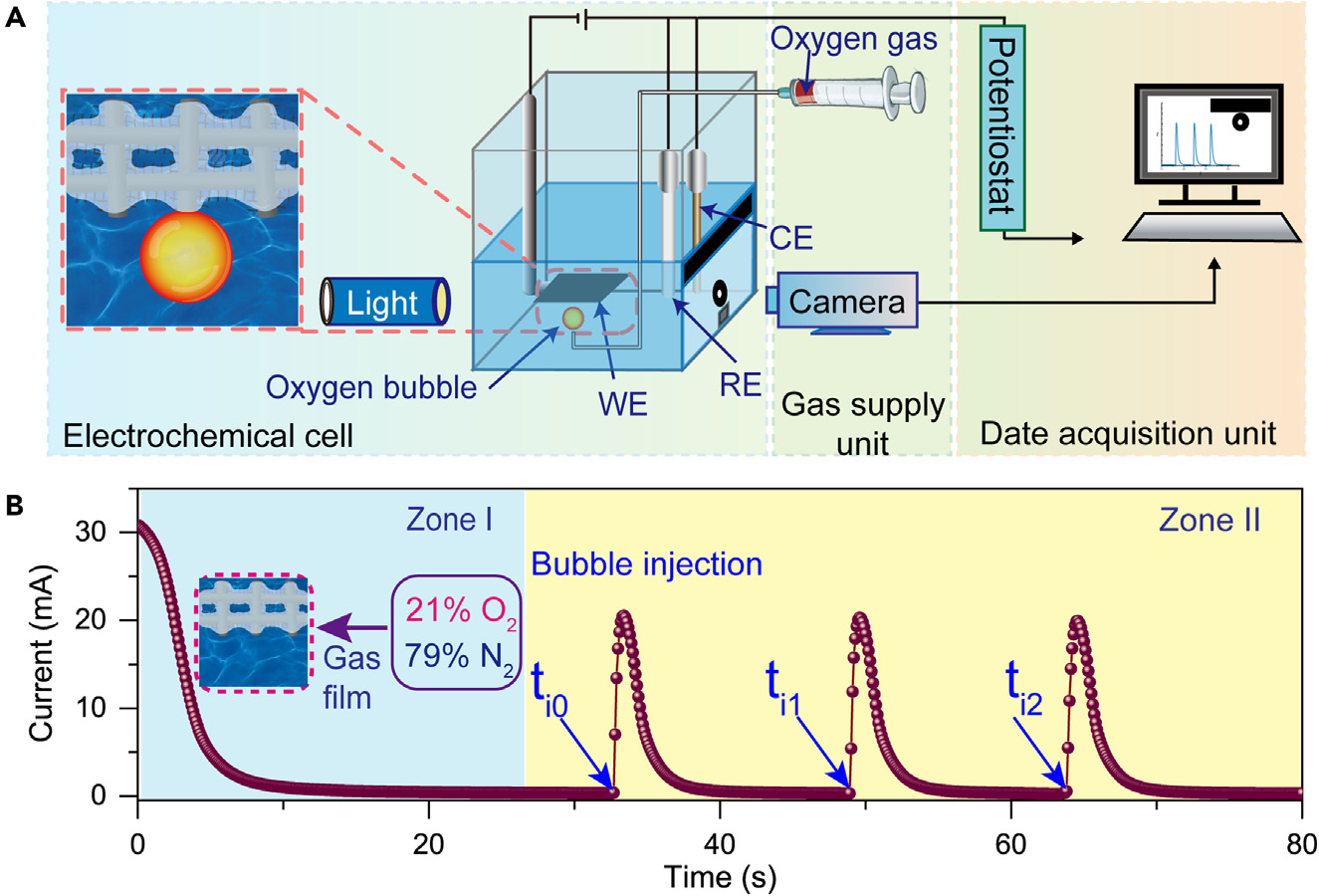
Bubble Pump Consumption Chronoamperometry (BPCC) is an in-situ characterization method that couples bubble transport behavior with electrochemical response. Under constant potential, a metered bubble is injected onto the gas diffusion electrode (GDE) surface, entering the porous interior and inducing local gas-liquid mass transfer changes. The electrode interface state shifts accordingly, producing a characteristic current response. The electrochemical workstation records the current-time curve in real time, and combined with bubble transport, pore structure and electrochemical kinetics models, the internal mass-transfer process of the GDE is quantitatively resolved.
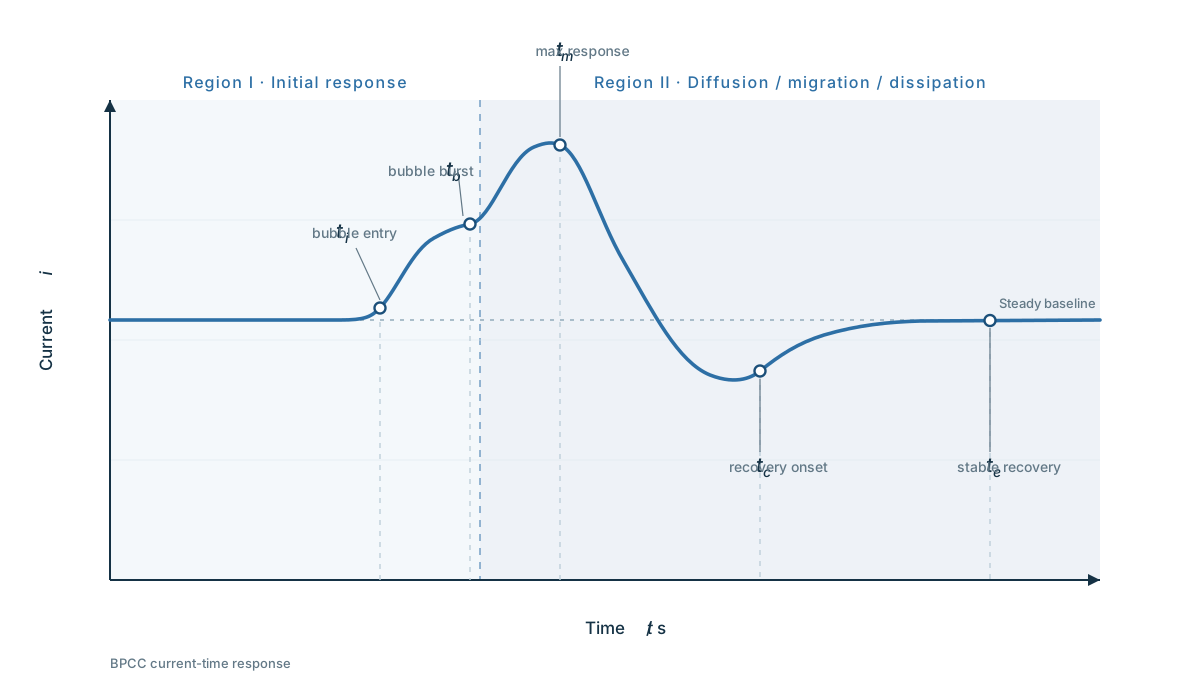
Current-time response curve
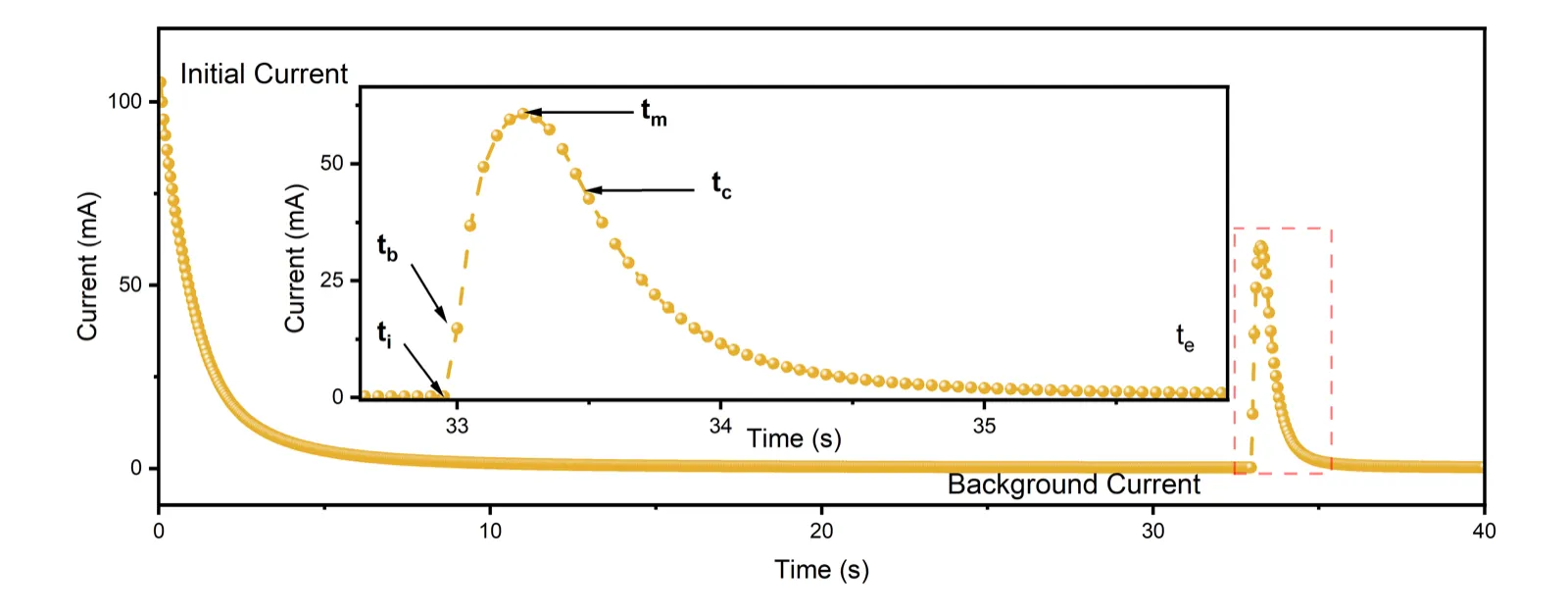
A typical BPCC current-time response curve divides into two main regions. Region I is the initial response stage, where current changes correlate with bubbles occupying internal pores, effective transport space and gas-liquid interface state, useful for analyzing pore structure and porosity. Region II corresponds to further bubble diffusion, migration and dissipation within the GDE. This stage defines characteristic nodes including bubble entry time (ti), bubble burst time (tb), maximum response time (tm), current recovery onset (tc) and stable recovery time (te), each corresponding to a distinct physical stage of bubble transport inside the electrode.
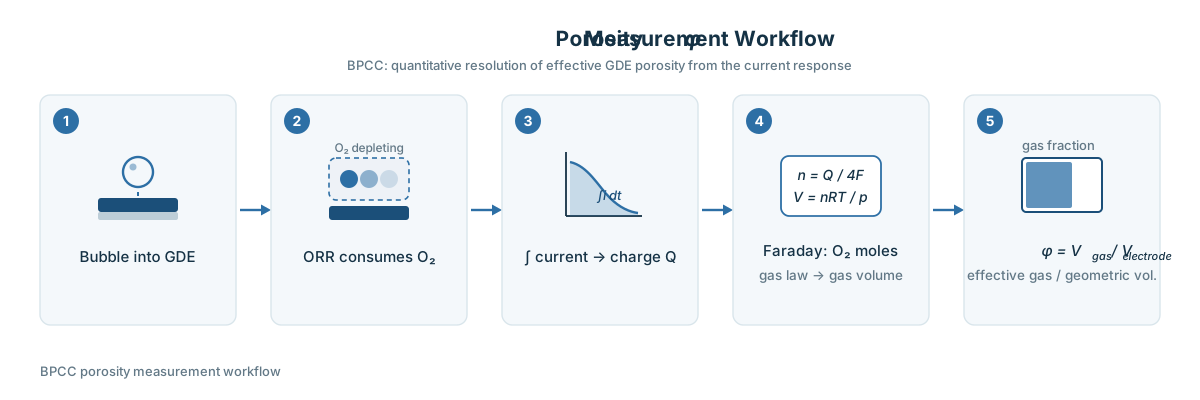
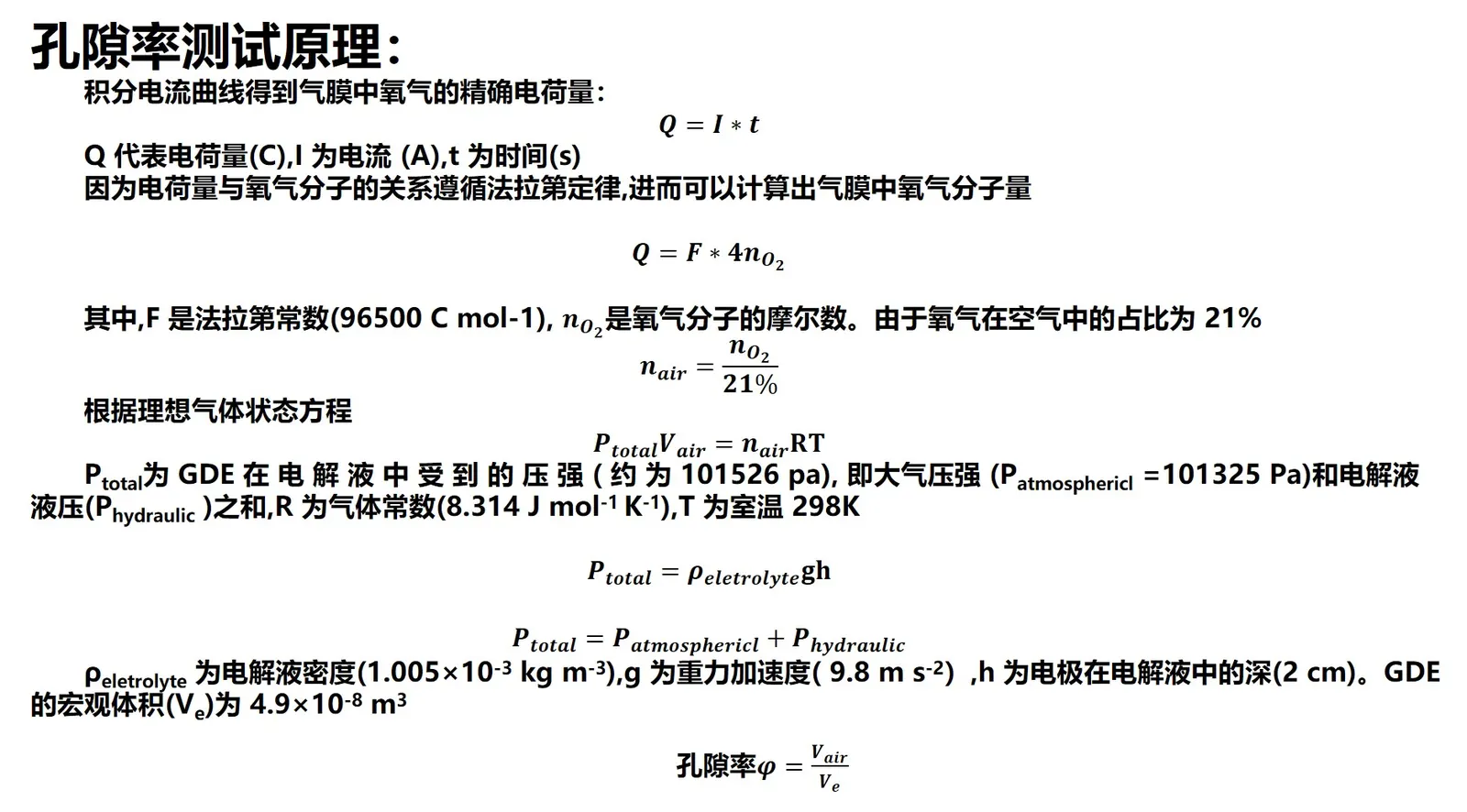
Porosity (φ) measurement
GDEs are typically hydrophobic and maintain a gas phase space in electrolyte, forming a stable gas film. BPCC consumes the oxygen in this gas film via electrochemical reaction and quantitatively analyzes the consumption process through the current response. Under constant potential, oxygen in the gas film is gradually consumed via the oxygen reduction reaction (ORR), producing a decaying current response. By integrating the current-time curve, the amount of oxygen consumed is calculated via Faraday's law, and combined with the ideal gas equation the effective internal gas volume of the GDE is obtained, yielding the effective porosity. This porosity reflects the pore space actually accessible to gas under real electrolyte working conditions.
Core relation: integrate current to obtain reaction charge Q; apply Faraday's law for oxygen moles; use the gas equation for gas-phase volume; finally φ = effective gas volume / electrode geometric volume. The related parameters are used to calculate porosity and diffusion coefficient; see Chem Catalysis 3, 100769 (2023) for details.
Effective active-site density (ρEC) measurement
GDE electrochemical performance depends not only on intrinsic catalyst activity but also on the number of effective active sites actually participating in the reaction. BPCC correlates oxygen transport behavior with the catalytic reaction zone by analyzing the current response during bubble diffusion and consumption inside the GDE. Injected oxygen is consumed by the catalyst via ORR; the current response relates to the oxygen diffusion coverage and the volumetric reaction rate. Fitting the current decay curve yields the effective rate constant k, which combined with the kinetic model and total integrated charge gives the effective active-site density. Compared with conventional catalyst characterization, this approach better reflects catalytic utilization during real electrode operation.
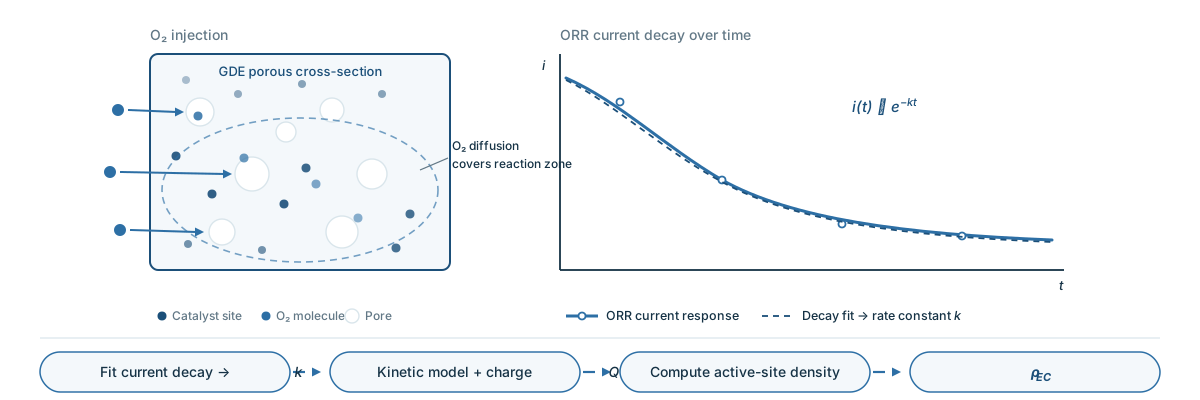
Gas diffusion coefficient (D) measurement
Gas diffusion performance is a key factor governing high-current-density operation of GDEs. BPCC correlates the current response with gas transport by analyzing the diffusion-consumption process of an oxygen bubble after it enters the GDE, enabling quantitative determination of the gas diffusion coefficient D. Once the effective active-site density is obtained from the total charge, the effective diffusion coefficient of oxygen inside the GDE can be derived from the rate constant k. This diffusion coefficient reflects the effective gas transport capacity under real electrochemical working conditions, integrating pore structure, wetting state and gas-liquid interface characteristics, and can be used to evaluate how different electrode designs affect gas transport.
BPCC-A system composition
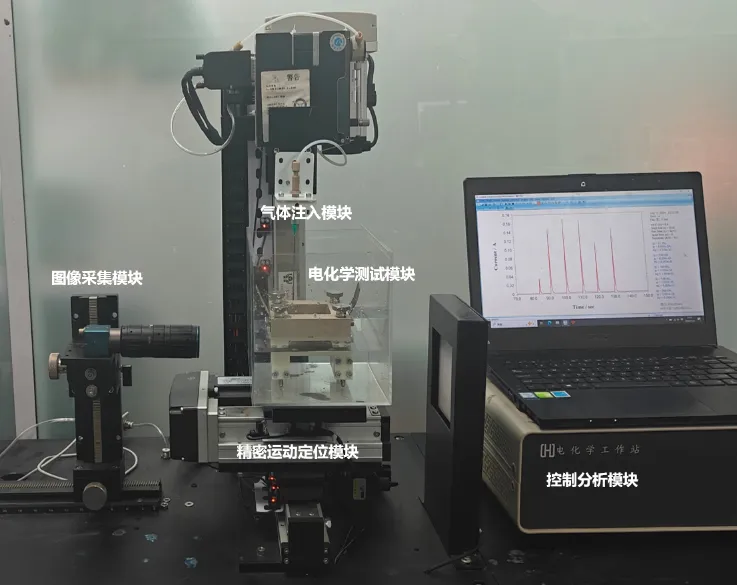
In-situ electrochemical test module
The core component of the BPCC system, building a GDE test environment close to real working conditions. It consists of the electrochemical test cell, electrode fixture and electrochemical connection system. During testing the GDE serves as the working electrode under constant potential or current, and the workstation acquires the current response induced by bubble injection in real time. It supports different GDE and membrane-electrode structures, with adjustable electrode size, electrolyte environment and test conditions.
Precision bubble injection module
Builds a controllable gas perturbation source on the GDE surface, the key functional unit distinguishing BPCC from conventional electrochemical methods. It precisely controls bubble size, injection position and release so that bubbles stably enter the porous electrode. Gas type, bubble size and injection parameters can be adjusted for different research needs, supporting electrochemical systems involving oxygen, air and other reactive gases.
High-resolution optical observation module
Records the full consumption process of bubbles on the GDE surface in real time, enabling full-process recording and visual analysis of bubble behavior. The high-resolution imaging unit monitors bubble size, count, trajectory and residence behavior during testing, and image analysis algorithms extract bubble-dynamics parameters. This module correlates microscopic bubble behavior with macroscopic electrochemical response, providing intuitive evidence for gas-liquid transport and three-phase interface evolution.
Data acquisition and analysis software
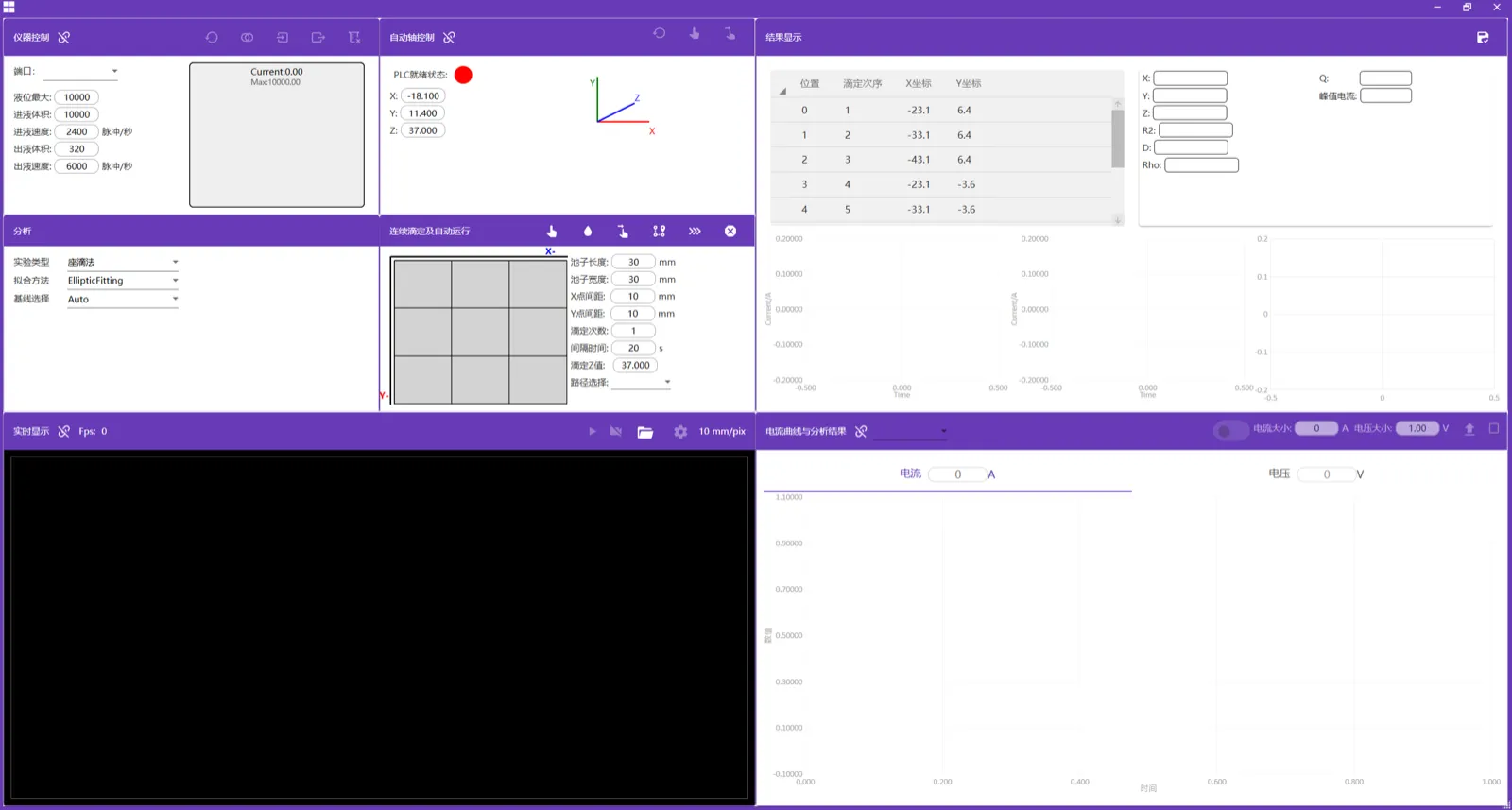
Integrates electrochemical signals, optical images and model computations. The software synchronously acquires the current-time response curve, bubble dynamic images and bubble size/motion parameters. Built-in analysis models automatically process the data to compute key parameters including effective porosity (φ), effective active-site density (ρEC) and gas diffusion coefficient (D). It supports data storage, curve fitting, parameter calculation and report generation, providing an integrated workflow from acquisition to results.
BPCC-A technical advantages
Authentic evaluation under in-situ working conditions
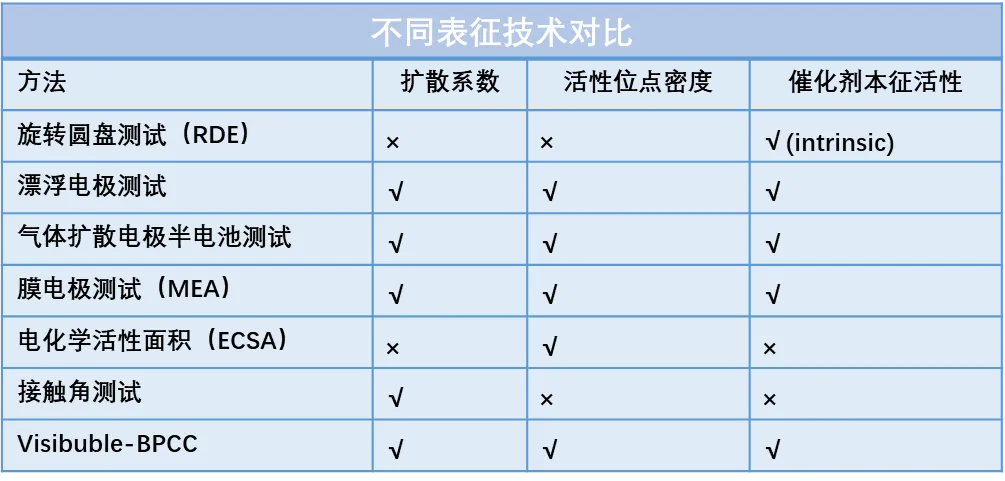
Conventional methods such as BET, mercury intrusion, contact-angle testing and rotating disk electrode typically characterize electrodes off-line, making it difficult to reflect gas transport and interface changes during real electrochemical operation. BPCC adopts an in-situ electrochemical mode, simulating the real GDE operating environment under constant potential or current. By actively introducing gas perturbation and synchronously monitoring the current response, it dynamically analyzes gas diffusion, consumption and interfacial reaction processes, yielding parameters closer to the real working state of the electrode.
Multi-parameter coupled analysis
Conventional techniques usually target a single structural or performance metric — BET for surface area and pore structure, contact angle for surface wettability, electrochemical testing for overall reaction performance — making it hard to directly link structural parameters with reaction behavior. BPCC couples electrochemical signals with bubble transport to simultaneously resolve multi-dimensional GDE parameters including effective porosity (φ), gas diffusion coefficient (D) and effective active-site density (ρEC).
Performance evaluation for real application systems
Compared with model systems that test catalyst activity in isolation, BPCC focuses on the comprehensive performance of a complete GDE structure in its real operating environment. The method applies to multiple gas-involving electrochemical systems including ORR, HOR and CO₂RR. By comprehensively evaluating gas transport capacity, active-zone utilization and interface stability inside the GDE, BPCC helps researchers optimize catalyst-layer structure, tune pore distribution and improve three-phase interface stability.
BPCC-A operation method
Typical workflow (ORR test example)
Gas connection and line pre-flush
Prepare the reaction gas (e.g. oxygen) and connect the cylinder to the gas input port and bubble injection system. Pre-flush the gas line before testing to fully expel residual air, ensuring the injected bubble composition matches the target reaction gas.
Device connection, software startup and initialization
Connect the device control interface to the host computer, start the control software and confirm normal communication across the electrochemical, bubble-injection and motion-platform modules. Complete initialization including injection-pump aspiration/exhaust, electrical-control module initialization and electrochemical test module initialization, so that residual air in the gas line is fully displaced by the target reaction gas.
Electrode installation and cell assembly
Fix the GDE in the dedicated electrode fixture and install it in the in-situ electrochemical cell. Adjust the position so the test area is fully immersed in electrolyte and the electrode surface keeps an appropriate distance from the bubble-injection needle. Select the test mode based on the system: gas-consuming reactions typically use a three-electrode configuration with the GDE as working electrode; device-level evaluation may use a two-electrode mode. The system supports standard-size electrodes and large-area electrodes up to about 4 cm × 4 cm.
Bubble injection position adjustment
Place the electrochemical cell on the XYZ motion platform and use the three-axis mechanism to adjust the relative position of the injection needle and the test area. For small-area electrodes the needle can be fixed at the target point for single-point testing; for large-area electrodes the XYZ platform enables automatic multi-region positioning to capture spatial differences in gas diffusion and reaction performance across the electrode surface.
Automated test parameter setup
In the automated test interface set electrode size, test area, injection count, point spacing and repeat count. For large-area electrodes, multiple positions and motion paths can be configured, with adjacent point spacing typically around 10 mm. Single-point tests can set repeat titration counts to improve reliability; a waiting time of no less than 15 s between injections lets the current response return to a stable background. Then set the working potential and start the test.
Data acquisition and result analysis
During testing the system synchronously acquires electrochemical signals and bubble dynamic images; the workstation records the current-time curve while the optical module records bubble behavior. After the test the software automatically performs background-current correction, characteristic-time identification, curve fitting and model computation, outputting parameters including effective porosity (φ), gas diffusion coefficient (D) and effective active-site density (ρEC), and generates a report containing raw data, fitted curves, bubble analysis and parameter results.
BPCC-A specifications
Precision XYZ motion system
| Parameter | Value |
|---|---|
| X / Y axis max travel | 150 mm |
| Z axis max travel | 350 mm |
| Control mode | Software automatic control |
| Application | Bubble-injection positioning, large-area sample scanning |
Precision reciprocating syringe pump
| Parameter | Value |
|---|---|
| Max injection volume | 200 μL |
| Min dosing resolution | 0.01 mm / step |
| Repeatability error | 0.3% – 0.5% |
| Volume accuracy | ≤ 1% |
High-speed optical acquisition system
| Parameter | Value |
|---|---|
| Camera resolution | 720 (H) × 540 (V) |
| Max frame rate | 528.5 FPS |
| Pixel size | 6.9 μm × 6.9 μm |
| Data interface | USB 3.0 |
| Macro lens working distance | 87 ± 3% |
| Macro lens magnification | 0.3X – 1.0X |
Programmable electrochemical control system
| Parameter | Value |
|---|---|
| Rated output voltage | 60 V |
| Rated output current | 10 A |
| Voltage set resolution | 0.001 V |
| Current readback resolution | 0.00001 A |
BPCC-A vs BPCC-L configuration
BPCC-A and BPCC-L share the same method, system modules and workflow; they differ in injection positioning and data output. The table below compares features item by item to support selection by electrode size and testing needs.
| Feature | BPCC-A | BPCC-L |
|---|---|---|
| Product positioning | Standard gas-diffusion performance evaluation platform | Large-area electrode spatial-distribution evaluation platform |
| Bubble injection mode | Fixed-position single-point injection | XYZ-positioned multi-point injection |
| Test mode | Single-region performance analysis | Multi-region automated scanning |
| Motion control | Fixed test position | Three-axis precision motion system |
| Data output | Single-point parameters | Spatial parameter mapping |
| Fixed bubble injection | √ | √ |
| Parameter calculation | √ | √ |
| XYZ auto positioning | — | √ |
| Multi-point testing | — | √ |
| Mapping analysis | — | √ |
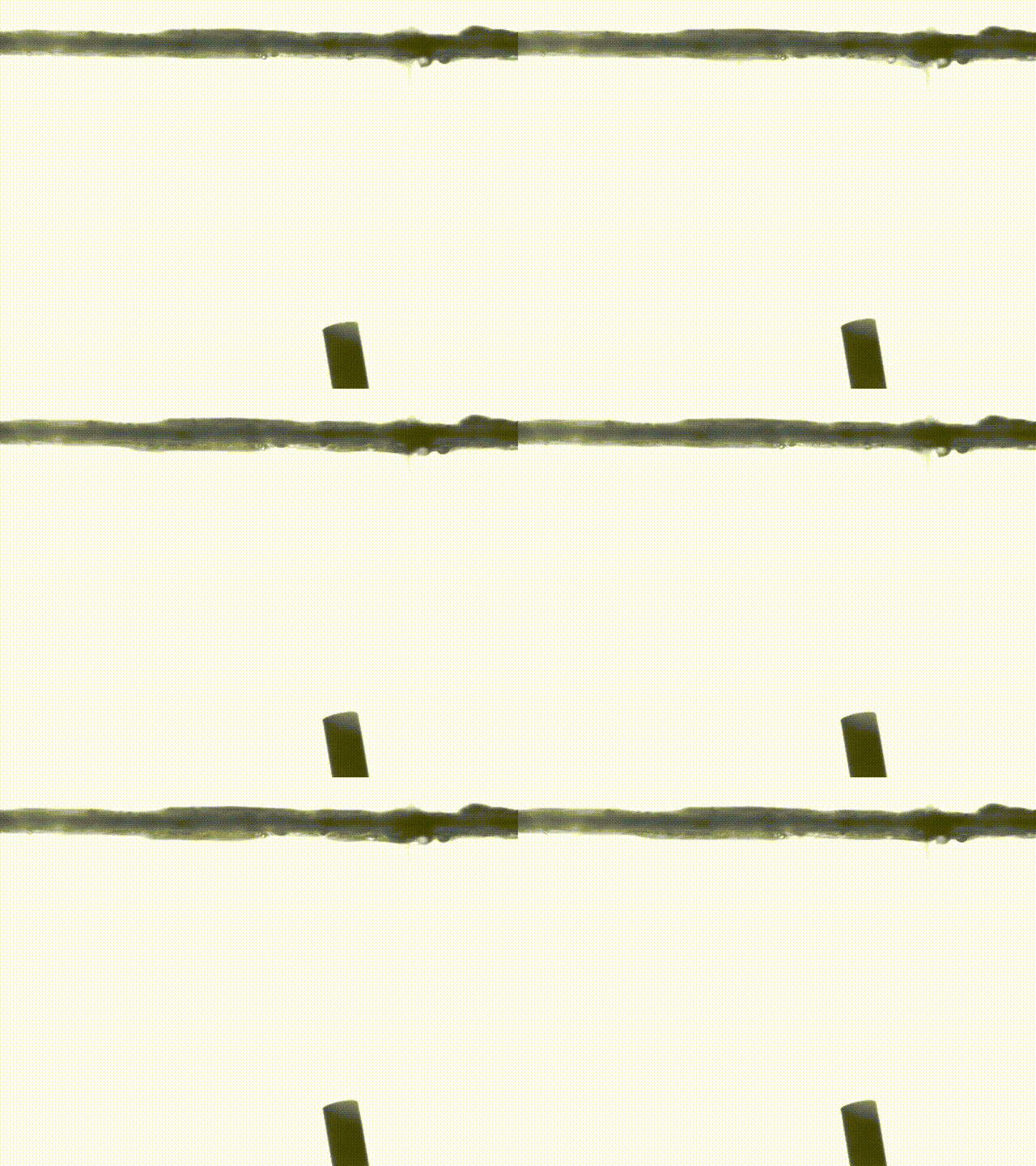
Metered bubble injection in motion
A BPCC measurement starts with one metered bubble: it enters the GDE surface and internal pores while the workstation records the current response in sync.
Compared with conventional characterization
Methods such as BET, mercury intrusion, contact-angle testing and rotating disk electrode typically run off-line; BPCC observes gas transport and interface changes under near-working conditions.
Software and system modules
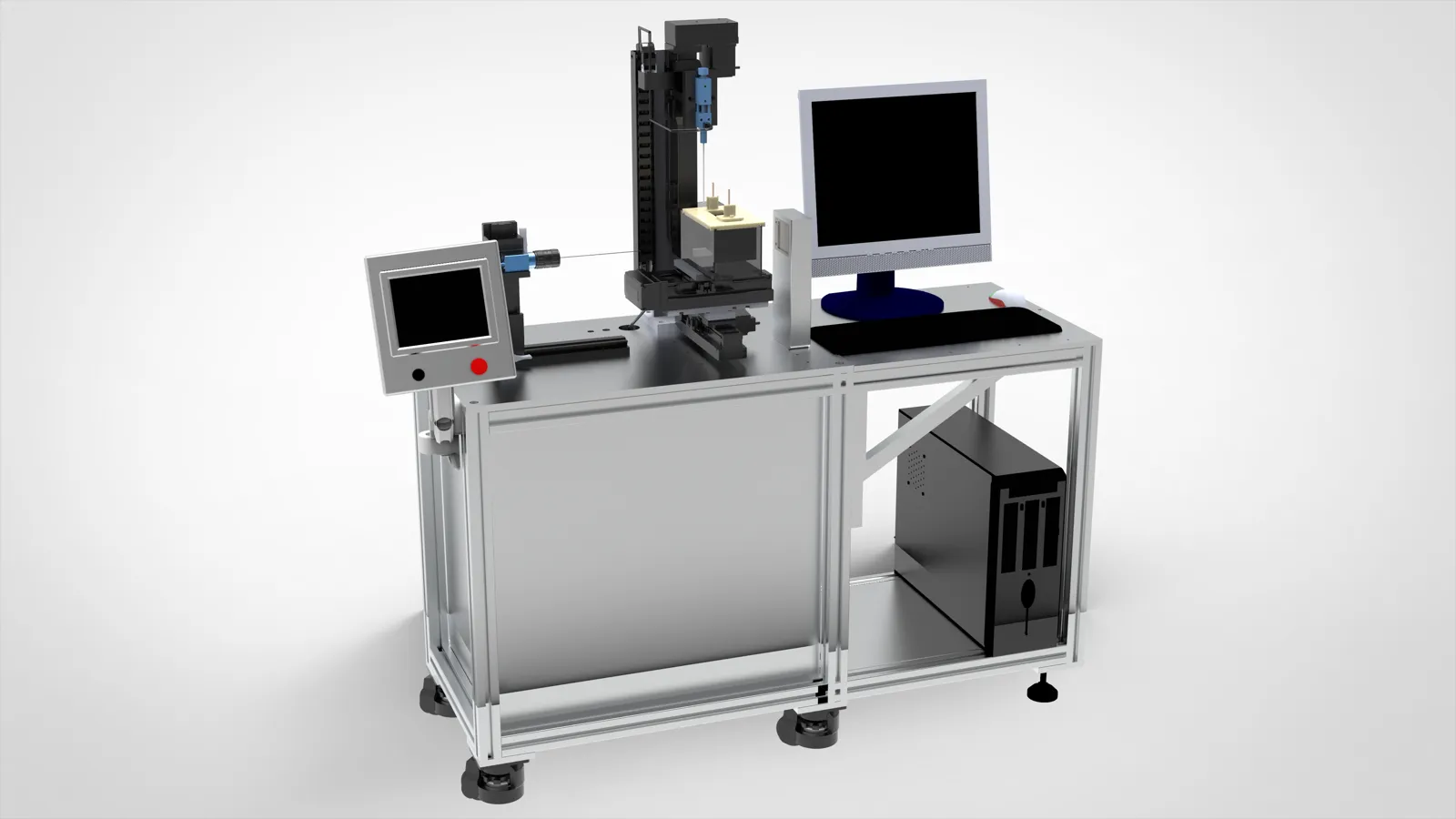
The control and analysis software covers instrument control, continuous titration auto-run and current-curve analysis; the system integrates image acquisition, gas injection, electrochemical testing, precision motion positioning and control-analysis modules.
10Source material archive4 items · expand
Further reference images from the original layout files: current-trace detail, bubble-pump test principle, porosity formula and annotated device structure.
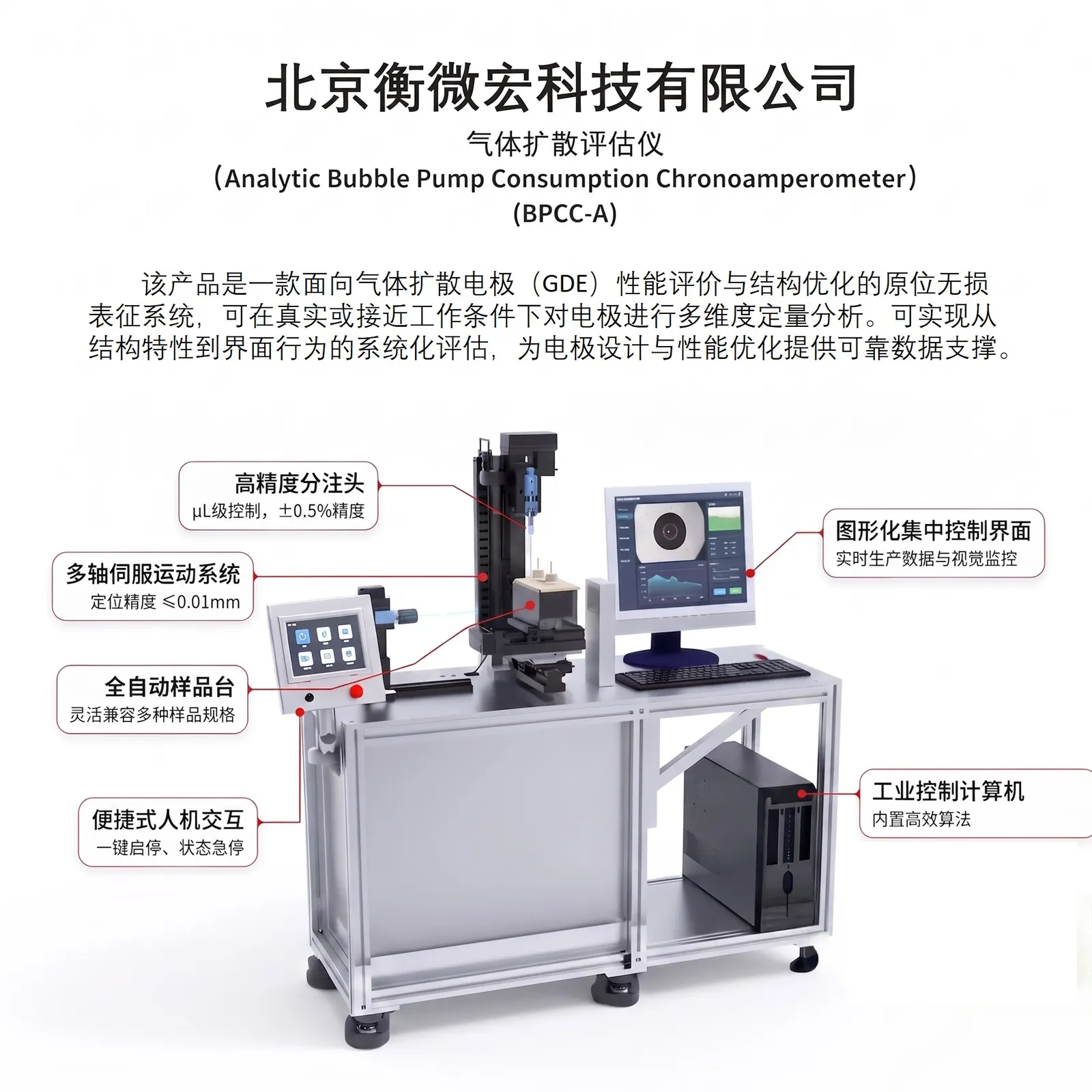
BPCC-A full product poster
The content above restructures the poster information for the web; below is the full product poster.